Read the offer, not only the number
BONU1's promotional artwork uses large gold amounts, a red first-deposit display, a welcome treasure, a free-spin wheel and a daily-reward throne. It is designed to make an offer easy to notice. The harder and more useful task is to understand what the offer actually asks of you. This guide gives you a method for reading a welcome bonus, first-deposit reward, free-spin promotion or daily benefit without treating the headline as the entire deal. If you want a quick visual overview first, visit the promotions page or the shorter bonuses page.
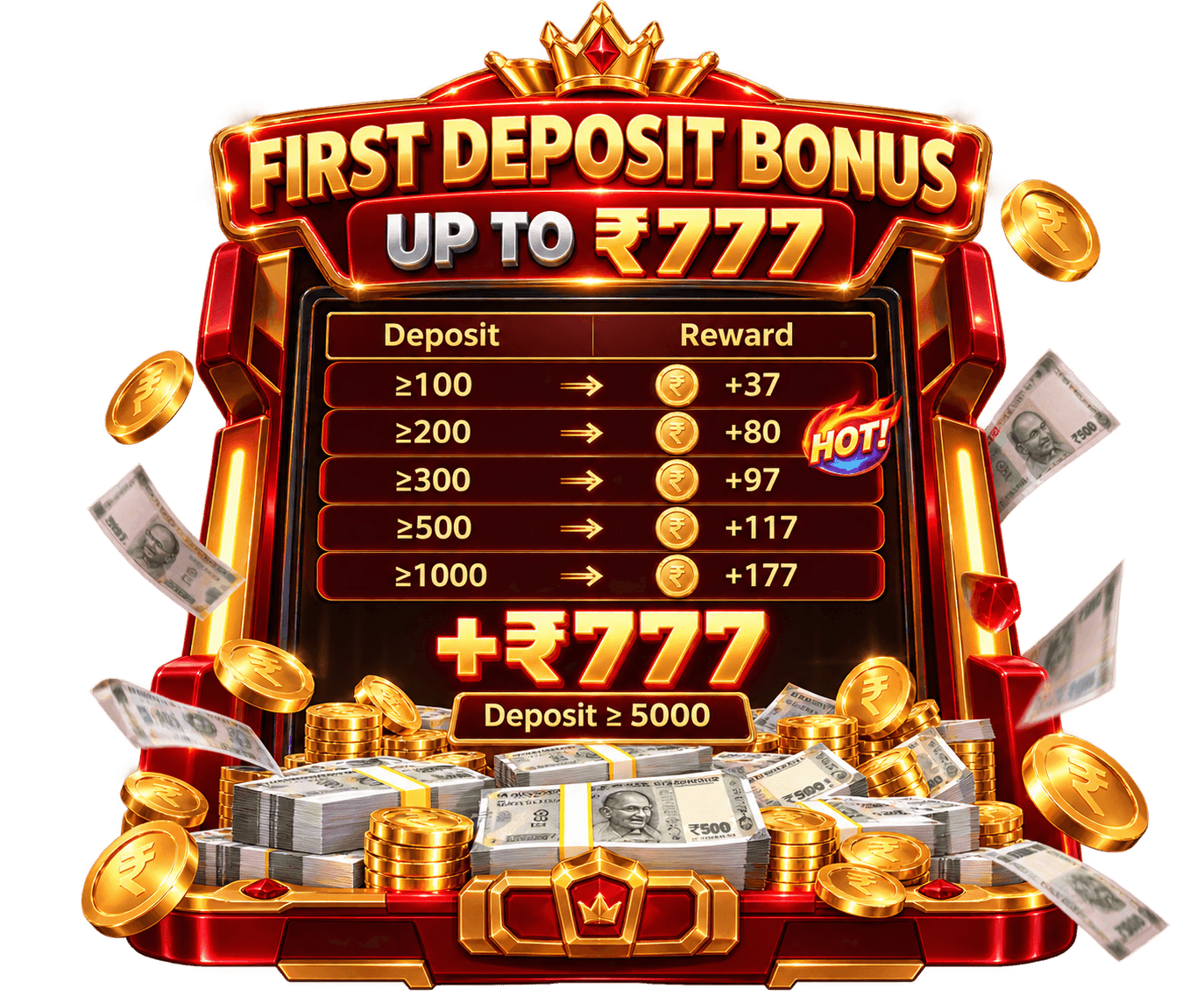
The website assets are promotional images, not a live offer feed or a complete set of legal terms. The first-deposit image includes example tiers and a headline of “up to ₹777.” A separate welcome image says “up to ₹5,000.” The free-spin and daily-reward images present additional themes. These numbers and phrases can help identify a campaign, but they do not establish that it is active today, available to you or combinable with another offer. Use current official terms for a current decision. This article explains what to look for when you reach them.
The five questions behind every bonus
You can turn a complex-looking promotion into five simple questions. Who is eligible? What action qualifies? What is the value and how is it calculated? When does it expire? What conditions govern use or withdrawal? Write the answers in ordinary language. If a term is difficult to translate into a clear sentence, ask for help before participating. That pause can be more valuable than trying to infer a rule from a banner. The BONU1 support guide explains how to frame an offer question without exposing account credentials.
Eligibility may include location, account status, age, first-time participation or a specific campaign period. Qualifying actions may include registration, a deposit, a game action or a daily check-in. Value may be fixed, tiered or capped by an “up to” amount. Expiry may apply to claiming, using or withdrawing a benefit, and those can be different dates. Usage conditions may limit games, stakes or the treatment of any resulting balance. A promotion becomes much easier to compare when each of these is visible rather than hidden behind an attractive number.
“Up to” is a ceiling, not a standard outcome
The phrase “up to” matters. It tells you that the headline amount is a maximum shown in the creative, not necessarily the amount every eligible person receives. In the first-deposit artwork, example deposit tiers appear below the ₹777 headline. That visual structure suggests that reward levels can differ by qualifying amount. The exact current tiers and conditions must still be checked in the official offer. Do not assume the pictured examples remain unchanged or that the highest tier is the right choice for your budget.
A useful comparison starts with the amount you intended to spend before seeing the promotion. Find the reward that corresponds to that amount, then decide whether the terms are acceptable. Reversing the process—choosing a much larger deposit to reach a bigger advertised reward—can let the marketing set your budget. A bonus should fit a decision you already made, not create a new financial target. Our responsible play guide discusses ways to hold that boundary when offers feel urgent or rewarding.
First-deposit offers: read the full path
A first-deposit promotion can involve several steps: opening an eligible account, making a qualifying deposit, activating the offer in a specified way and using the benefit within a time period. The exact sequence varies, so the live terms matter. Some offers may credit a reward automatically; others may require a selection or claim. This site does not verify which path BONU1 uses. The join guide explains the account checks that come before any deposit, and the login guide covers official access for returning visitors.
Before a deposit, look for minimum and maximum amounts, payment eligibility, any one-time-only language, processing time and the method used to contact support if a reward is missing. Ask whether the benefit is cash, a token, a spin, a credit or another form of value. Then find any restrictions on games or withdrawal. A headline such as “first deposit bonus” names the campaign, but it does not answer these operational questions. If terms are unavailable, waiting is a better decision than hoping the system will apply the offer as you expect.
Welcome bonuses are not always the same offer
The BONU1 welcome treasure creative is separate from the first-deposit board. Both speak to new visitors, but that overlap does not prove they can be combined. One may be a general welcome campaign; another may be tied to a first deposit. They may have different eligibility windows or reward types. Compare each offer as its own agreement. If the official product allows only one selection, choose using the full terms rather than the largest pictured number. If the answer is unclear, use a verified support route before acting.
The most useful welcome bonus is one you understand and can use without changing your original plan. Check whether any benefit requires a specific game category, whether it expires quickly and whether you must take another action to claim it. If the offer mentions a balance, check how that balance is displayed separately from any deposited amount. Our what is BONU1 guide provides a broad tour of the site's themes, while the games overview helps you see whether eligible categories would interest you even without an incentive.
Free spins need their own rule check
“Free spin” sounds straightforward, yet the phrase can cover different mechanics. It might refer to a wheel entry, a number of spins on a particular game, or a campaign with its own timing and conditions. The supplied free-spin artwork shows a decorated wheel and the words “Free Spin,” but does not establish how a live offer is activated, how often it can be used or what any result means. Look for the exact entry rules, eligible games, availability period and result treatment. Avoid assuming that a graphic represents an unlimited or risk-free benefit.
Ask whether a free spin requires an account, a deposit or some other action. If there is a limit on claims, identify it before planning a visit around the promotion. If winnings from a promotional spin have separate conditions, read those too. A spin can be visually exciting even when the practical value is modest or restricted. The game guide explains why the rules of the underlying title and the rules of the offer are separate questions.
Daily rewards and the habit question
The daily-reward throne artwork presents a strong visual: crown, podium and a large maximum. It suggests a recurring reason to return. Before using any daily promotion, check what “daily” means in the official terms. Is the period based on local time, a rolling 24-hour window or a campaign calendar? Does a claim require activity, and is there a deadline? Are rewards fixed or variable? The website cannot answer these from the image alone, which is why the VIP and daily rewards page focuses on the questions rather than inventing a tier table.
Recurring offers deserve an extra personal check. Would you open the app today if the reward were not there? If not, is the visit still within the time and spending plan you chose? There is nothing wrong with declining a benefit that does not fit your routine. A daily banner can create a feeling of missing out, but an unclaimed promotion is not a loss. That distinction can help you keep play recreational instead of obligation-driven.
Understand conditions on using a reward
Some promotions restrict where or how a benefit can be used. A credit may apply only to certain titles or may have stake limits. A free spin may have its own result rules. A bonus balance may be treated differently from a deposit. You should not have to guess. Find the section of the current terms that explains eligible games, usage order, expiry, maximum reward and withdrawal treatment. Read it before you claim or deposit, because those details can determine whether an offer fits your interests.
The broad BONU1 games page is helpful for understanding the categories in the site's creative, but it does not replace an eligibility list for a specific promotion. A game can be available on a platform while not counting toward an offer. Likewise, a promotion can be visible in advertising while not being available to every account. Keep a copy of the actual terms you relied on, especially if the campaign has a date or a personal eligibility requirement.
Compare offers on your own terms
You can make a simple comparison table on paper. Put the offer names in rows and the five questions across the top: eligibility, qualifying action, value, expiry and usage. Add a column for “would I still choose this without the bonus?” That last question protects your own preference. If one answer is missing, the table is incomplete. Do not fill the blank with an assumption based on another campaign. Similar branding does not mean identical terms.
For example, you might compare a first-deposit campaign with a free-spin campaign. The first could require a qualifying amount; the second could require a specific game or time. One might offer a larger headline while the other asks for less commitment. Without live terms, you cannot rank them accurately. The right choice is not automatically the largest number; it is the offer that you understand, qualify for and would use within your preset limits. The promotions page is a visual starting point, not the final comparison.
Watch the clock and the wording
Promotional terms can use several dates: a campaign end, a claim deadline, an activation window and an expiry for using the benefit. They may also describe when a qualifying action has to be completed. Read those dates in the correct time zone and note whether the rule refers to an action being started or finished. If a countdown appears, do not let it replace your normal decision process. A deadline can tell you when an offer ends, but it cannot make unsuitable terms suitable.
Words such as “instant,” “guaranteed” or “cash” require precision. Does “instant” refer to crediting, processing or display? Does “guaranteed” apply to entry rather than outcome? Is “cash” withdrawable, or is it a label for promotional value? The answer must come from clear terms, not from your preferred interpretation. If the wording remains ambiguous, contact verified BONU1 support before sharing payment details or making a deposit.
Keep game rules and offer rules separate
An offer can sit on top of a game, but it does not rewrite the game's mechanics. You need to understand both layers. A slot may have its own symbols and payout table, while an offer may limit the stake or specify that only certain spins count. A card title may have one rule set, while a promotion may only apply during a particular period. The BONU1 game guide covers how to read title-level rules; this article helps you examine the extra conditions attached to a campaign.
Keeping the layers separate also makes support questions clearer. Instead of asking “why did the game not give my bonus?” you can identify the title, the offer name, the date, the qualifying action and the exact term you believe applies. You can then ask which rule governed the result. Do not include passwords or one-time codes in that request. A clear description of the issue is useful; sensitive authentication information is not.
A safer way to respond to a tempting offer
Marketing is built to attract attention. If you see a large number or a limited-time message, pause long enough to re-read your budget and the current terms. Ask whether the offer changes how much you planned to deposit, how long you planned to play or which game you wanted to try. If it changes any of those, consider leaving it for another day. An offer can be interesting without being suitable. The responsible play article turns this pause into a practical routine.
If you have already participated and feel pressure to continue in order to “use up” a bonus, step away. Sunk time or money does not create an obligation to spend more. A missed offer is not a debt. If you find yourself repeatedly changing a limit to chase the next tier or reward, ask a trusted person for perspective and consider using available account controls or local help resources. The purpose of a bonus guide is to improve understanding, not to encourage extra play.
When you need help with a claim
If a current official offer does not behave as expected, collect the relevant facts before contacting support: offer name, date and time, account reference, qualifying action, visible terms and the result shown. Preserve screenshots privately when appropriate, but do not post personal or payment information publicly. Use only a support destination verified inside the official product. The support page gives more detail on safe communication and the login page reminds you to protect account credentials.
Describe the discrepancy without assuming a particular result is owed. Ask which term applies and where it is written. If the answer points to a condition you overlooked, update your understanding before using another offer. If the answer is unclear, request a written explanation through a verified channel. Clear records are helpful because campaigns can change, and your question may concern the exact version visible when you acted.
The clearest next step
Use the BONU1 bonuses page to identify the headline themes, then compare any live offer with the five-question method: eligibility, qualifying action, value, expiry and usage. Visit games if a campaign points to a category you do not know. Read the app guide before following a mobile download route, and use support when terms remain uncertain. A promotion should be understandable before you commit to it.
The most important result of reading a bonus page is not finding the biggest number. It is knowing exactly what the number means for you and whether the conditions fit a plan you already made. Bright artwork can introduce an opportunity; current official terms must define it. If those terms are missing, expired or hard to explain, waiting is a sound decision. Clear information and self-chosen limits make a much better foundation than urgency.
Keep a reusable offer note
If you regularly compare promotions, keep a small note that records the facts you checked. Write the campaign name exactly as it appears, where you found the official terms, the date you viewed them, the action required and the limit you would keep even without the incentive. This note is not a betting strategy. It is a way to prevent an exciting design from replacing your memory of the conditions. It can also help you notice when two banners use similar words but describe different campaigns.
Review the note before each new offer rather than copying an old conclusion. Terms can change, and a campaign that once fit your situation may no longer apply. If you cannot find a current version of the rules, mark that as unanswered instead of treating silence as permission. A useful comparison allows “unknown” and “not for me” as outcomes. You do not have to convert every promotion into a claim.
This practice also clarifies your conversations with support. You can ask a specific question about an eligibility clause or a date instead of sending an entire screenshot and hoping someone interprets it for you. Keep private data out of the note if you plan to share it. A concise, factual record supports a calmer decision whether you claim, wait or leave the offer unused.
Keep exploring: games, promotions, support and the full blog.